
Types of Solar Mounting Structures
As solar energy adoption continues to grow across residential, commercial, and industrial sectors, one crucial component often overlooked is the solar mounting structure. While solar panels generate electricity, it is the mounting structure that determines stability, durability, efficiency, and long-term performance of the entire system.
Choosing the right solar mounting structure is not a one-size-fits-all decision. It depends on site conditions, project scale, materials, and budget. In this blog, we break down the key factors, material choices, and cost considerations to help you make the right decision for your solar project.
1. Understanding Different Types of Solar Mounting Structures
Before selecting a structure, it’s important to identify the type of solar installation you are planning.
Rooftop Solar Mounting Structures
Ideal for residential buildings, commercial complexes, factories, and warehouses.
- Fixed tilt structures
- Adjustable tilt structures
- Lightweight aluminum rail systems
Best for: Limited space, urban installations, quick deployment.
Ground-Mounted Solar Structures
Installed directly on open land using pile-driven or foundation-based systems.
- Fixed ground-mounted structures
- Elevated structures for uneven terrain
Best for: Utility-scale projects, solar farms, industrial land.
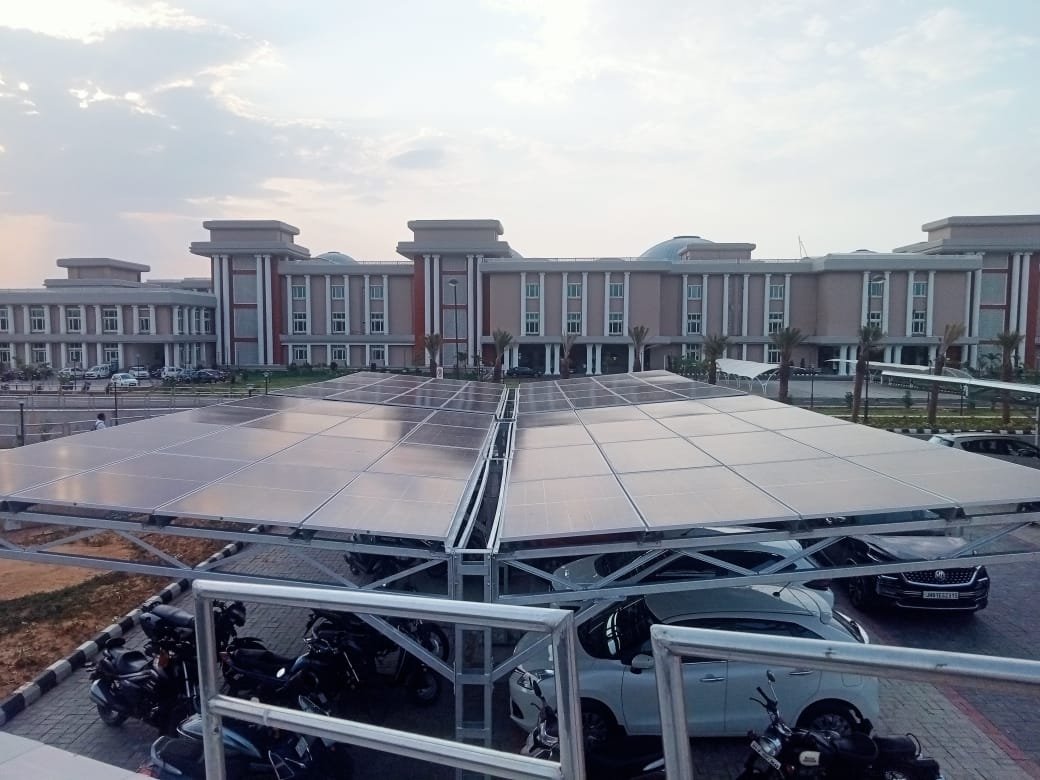
Solar Car Parking / Canopy Structures
Dual-purpose structures that provide shaded parking while generating solar power.
- Steel canopy structures
- Custom-designed car parking solutions
Best for: Commercial complexes, malls, offices, institutions.
Solar Tracking Systems
Structures that follow the sun’s movement to maximize energy generation.
- Single-axis trackers
- Dual-axis trackers
Best for: Large-scale projects focused on higher energy yield.
2. Key Factors to Consider Before Choosing a Solar Mounting Structure
Load-Bearing Capacity & Structural Strength
The mounting structure must withstand:
- Wind loads
- Seismic activity
- Panel weight and live loads
Proper structural design ensures safety and long-term stability.
Site Conditions
Each location presents unique challenges:
- Roof type (RCC, metal sheet, slope angle)
- Soil condition for ground-mounted systems
- Space availability and shading
A site survey is essential before finalizing the structure.
Orientation & Tilt Angle
Correct tilt and orientation directly affect power output.
- Fixed tilt structures are cost-effective
- Adjustable or tracking systems improve efficiency in high-output projects
3. Choosing the Right Material: Steel vs Aluminum
Galvanized Steel Structures
Advantages:
- High strength and durability
- Cost-effective for large installations
- Suitable for harsh weather conditions
Common Uses: Ground-mounted systems, solar car parking, industrial rooftops.
Aluminum Solar Mounting Systems
Advantages:
- Lightweight
- Corrosion-resistant
- Easy and faster installation
Common Uses: Rooftop systems, residential and commercial projects.
4. Cost Considerations for Solar Mounting Structures
Several elements influence the total cost:
Material Cost
- Steel structures are generally more economical for large-scale projects
- Aluminum systems cost more initially but save on maintenance
Installation & Fabrication
- Custom fabrication may increase upfront cost
- Precision engineering reduces installation time and future issues
Long-Term Maintenance
- Galvanized and corrosion-resistant materials lower maintenance expenses
- High-quality fabrication ensures longer life and better ROI
5. Why Quality Fabrication Matters
A well-designed solar mounting structure ensures:
- Maximum panel efficiency
- Reduced risk of damage or misalignment
- Longer system lifespan
Choosing a reliable fabrication partner with experience in custom engineering and precision manufacturing is crucial for project success.
6. Why Choose SmartCube for Solar Mounting Structures?
At SmartCube, we specialize in:
- Custom-designed solar mounting structures
- High-quality steel and aluminum fabrication
- Structures engineered for strength, durability, and performance
- Solutions for rooftop, ground-mounted, car parking, and tracking systems
Our focus on precision fabrication and engineering excellence ensures that your solar project stands strong for decades.
Conclusion
Selecting the right solar mounting structure is just as important as choosing high-quality solar panels. By considering project type, site conditions, materials, and costs, you can ensure optimal performance and long-term reliability.
Whether you’re planning a small rooftop installation or a large industrial solar project, investing in the right mounting structure will maximize returns and protect your solar investment.