
Solar Mounting Structure Types in India
Solar energy adoption in India is growing rapidly across residential, commercial, and industrial sectors. However, most people focus only on solar panels and ignore one of the most critical components of the system: the solar mounting structure.
A solar mounting structure is the backbone of any solar installation. It holds the panels securely, ensures correct tilt and orientation, and protects the system from wind, rain, and other environmental loads. Choosing the right structure directly impacts efficiency, safety, and long-term performance.
What is a Solar Mounting Structure?
A solar mounting structure is an engineered framework used to fix solar panels on rooftops, ground, or other surfaces. Its primary role is to:
- Support the weight of solar panels
- Maintain optimal tilt angle for maximum sunlight exposure
- Withstand wind and weather loads
- Ensure long-term structural stability
Major Types of Solar Mounting Structures in India
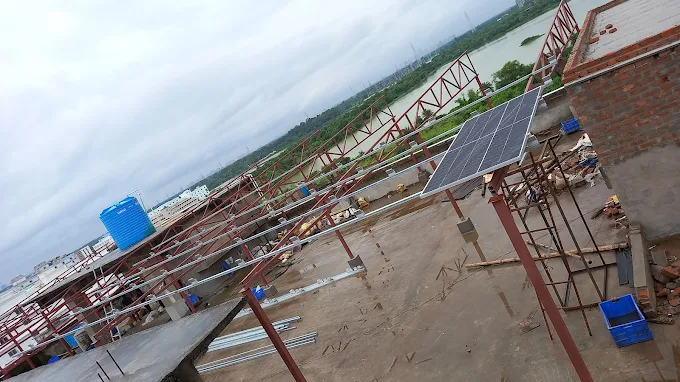
1. Rooftop Solar Mounting Structures
Rooftop systems are the most commonly used solar installations in India for homes, offices, and factories.
They are installed on:
- RCC flat roofs
- Sloped roofs
- Industrial sheet roofs
Key features:
- Cost-effective installation
- Uses unused roof space
- Easy maintenance access
- Suitable for small to medium systems
Rooftop mounting is ideal where land availability is limited.
2. Ground Mounted Solar Structures
Ground mounted systems are installed on open land using strong steel or aluminum frameworks anchored into the soil or concrete foundations.
Key features:
- High energy generation efficiency due to optimal orientation
- Easy cleaning and maintenance
- Suitable for large-scale solar projects
- Requires land availability
These systems are widely used in solar farms and industrial projects.
3. Solar Carport Structures
Solar carport systems are dual-purpose structures that provide both parking shade and power generation.
Key features:
- Space optimization in commercial areas
- Protection for vehicles from sunlight and rain
- High structural load requirement
- Increasingly used in malls, hospitals, and corporate buildings
4. Tracking Solar Mounting Structures
Tracking systems automatically adjust panel angles based on the sun’s movement.
Key features:
- Higher energy generation efficiency
- More complex mechanical structure
- Higher installation and maintenance cost
- Used in advanced or utility-scale projects
Materials Used in Solar Mounting Structures
The durability of a solar structure depends on the material used:
- Galvanized Iron (GI): Cost-effective and widely used
- Hot-Dip Galvanized Steel (HDGI): High corrosion resistance and long lifespan
- Aluminum: Lightweight and ideal for coastal or corrosive environments
Proper material selection ensures long-term safety and performance.
How to Choose the Right Solar Mounting Structure
Based on Available Space
- Rooftop: Best for homes and buildings
- Ground mount: Best for open land
Based on Budget
- GI structures: Economical
- HDGI or aluminum: Premium durability
Based on Energy Requirement
- Small systems: Rooftop structures
- Large-scale systems: Ground-mounted or tracking systems
Based on Environmental Conditions
- Coastal or humid areas: Aluminum recommended
- High wind zones: Heavy-duty HDGI structures required
Importance of Structural Engineering in Solar Systems
Many solar failures in India are not due to panels but due to weak or poorly designed mounting structures. A properly engineered system ensures:
- Wind load safety
- Long-term corrosion resistance
- Structural stability for 25+ years
- Compliance with safety standards
This is where professional engineering expertise becomes essential.
Conclusion
Choosing the right solar mounting structure is as important as selecting the solar panels themselves. Each type—rooftop, ground-mounted, carport, or tracking system—serves a different purpose based on space, budget, and energy needs.
For safe, efficient, and long-lasting solar installations, proper structural design and engineering must be prioritized over cost alone. Consulting experienced engineering professionals ensures that your solar investment delivers maximum performance and safety over its lifetime.
Contact expert solar structure engineers to design a safe and efficient mounting system for your project.