

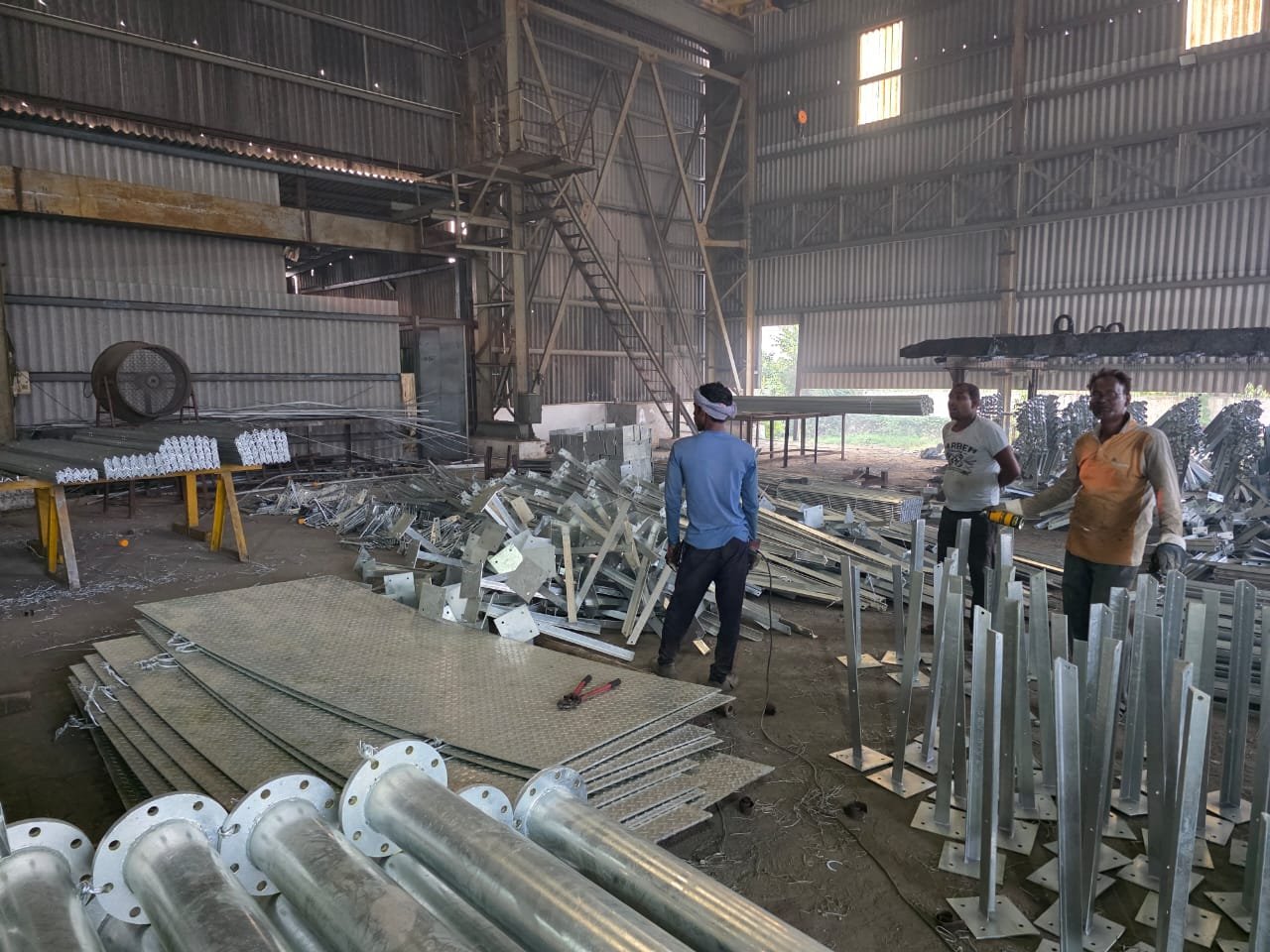
Solar Structure for Factories
Factories are increasingly adopting rooftop solar systems to reduce electricity costs, improve energy efficiency, and make better use of available roof space. However, installing solar panels on an industrial roof requires more than selecting the right panels and inverter. A strong, durable, and properly engineered solar structure for factories is essential for supporting the panels and protecting the installation over the long term.
Smart Cube India manufactures solar mounting structures for industrial factories, warehouses, commercial buildings, and other applications. Its solar structures are available in rooftop, ground-mounted, elevated, tin-shed, and customized configurations.
Why Solar Structures Are Important for Factory Rooftops
A solar mounting structure acts as the supporting framework between the factory roof and solar panels. It maintains the required panel orientation and tilt while helping the system withstand environmental conditions such as wind and rain.
For an industrial installation, the structure must be designed according to the roof type, panel arrangement, structural load, wind conditions, available space, and project requirements. A poorly designed structure can create stability and maintenance problems over time.
What Is a Solar Structure for Factories?
A factory solar structure is a specially designed framework used to install solar panels on industrial rooftops. Depending on the roof construction, the system can be designed for RCC roofs, metal sheet roofs, tin sheds, or other suitable surfaces.
Smart Cube India provides rooftop solar structures that can be used for large factory roofs as well as warehouses and commercial buildings. Its website specifies Hot Dip Galvanized Steel and aluminium as material options, with customizable tilt angles from 10° to 30°.
Types of Solar Structures Suitable for Factories
Rooftop Solar Structure
Rooftop solar structures are suitable when a factory has sufficient roof space for installing solar panels. They can be designed for RCC and metal-sheet roofs according to the site’s requirements.
Using the existing roof can help utilize unused space without requiring additional land for the solar installation.
Tin Shed Solar Structure
Many factories and warehouses have metal or tin-sheet roofs. A suitable clamping and mounting arrangement can be used to install solar panels while considering the strength and condition of the existing roof.
The structure should be designed carefully to account for roof profile, fixing points, wind load, and water drainage.
Elevated Solar Structure
Elevated structures can be useful when the area below the solar panels needs to remain accessible. They may be considered for factory areas where additional clearance is required for movement, storage, parking, or other activities.
Ground-Mounted Solar Structure
If a factory has suitable open land, a ground-mounted solar structure can be considered instead of using the rooftop. Ground-mounted systems can provide flexibility for panel arrangement, maintenance access, and future expansion.
Smart Cube India lists ground-mounted solar structures among its applications and showcases a 2 MW ground-mounted project in Patna.
Key Factors to Consider Before Installing a Factory Solar Structure
Factory Roof Condition
Before installing a solar mounting system, the condition and structural capacity of the factory roof should be evaluated. Existing damage, corrosion, weak sections, or unsuitable roofing materials may need attention before installation.
Wind Load
Industrial rooftops are exposed to wind forces, and solar panels can create additional wind loads on the supporting structure. Therefore, wind conditions at the project location should be considered during structural design.
Smart Cube India states that its solar mounting structures are designed for wind-load resistance up to 180 km/h, subject to the applicable project design.
Solar Panel Layout
The number, size, orientation, and arrangement of solar panels directly influence the design of the mounting structure. The available roof area should be evaluated to create an efficient panel layout while maintaining suitable access for inspection and maintenance.
Tilt Angle and Orientation
Correct tilt and orientation can help position solar panels appropriately for solar generation. The ideal arrangement depends on the project’s location, roof conditions, panel configuration, and engineering requirements.
Smart Cube India lists customizable tilt angles from 10° to 30° for its solar mounting structures.
Material Selection
The material used for the solar structure has an important impact on strength, durability, weight, and corrosion resistance.
Common options include galvanized steel and aluminium. The right choice depends on project requirements, environmental conditions, structural loads, installation method, and budget.
GI and HDGI Solar Structures for Industrial Applications
Galvanized steel structures are commonly considered for solar installations because the zinc coating helps protect steel against corrosion.
For industrial projects, the appropriate galvanization level and material specification should be selected according to the project’s environment and expected service conditions.
Smart Cube India specifies Hot Dip Galvanized Steel and aluminium for its solar mounting structures, with a listed galvanization coating range of 65–120 microns.
How Much Does a Factory Solar Structure Cost?
The cost of a solar structure for factories depends on several factors rather than a single fixed rate.
Important factors include:
- Solar plant capacity
- Factory roof type
- Structure height
- Material selection
- Steel thickness
- Wind-load requirements
- Panel arrangement
- Tilt angle
- Installation complexity
- Custom engineering requirements
Smart Cube India’s 2026 cost guide also notes that solar structure pricing varies according to material, application, design, wind zone, project size, and installation complexity.
For an accurate quotation, project-specific information should be provided to the manufacturer instead of relying only on a general per-kW estimate.
Solar Structure Design and Engineering Process
A professional solar structure should be designed after understanding the actual project conditions.
Site Assessment
The first step is evaluating the factory location, roof type, available space, access points, and existing structural conditions.
Load Analysis
The structure should be assessed for relevant dead loads, wind loads, panel loads, and other applicable structural considerations.
Panel Layout Planning
Engineers determine how many panels can be installed and how they should be arranged to make effective use of the available roof area.
Structural Design
The structure is then designed according to the project’s requirements, including material, dimensions, connections, height, tilt, and fixing method.
Fabrication and Quality Control
After approval of the design, structural components are fabricated according to the required specifications. Smart Cube India highlights precision fabrication, quality control, and customized structural solutions as part of its capabilities.
Benefits of Installing Solar Structures on Factory Roofs
Better Use of Existing Space
Factory rooftops often provide substantial unused space. Installing solar panels on the roof can turn this unused area into a productive energy-generation zone.
Reduced Land Requirement
A rooftop installation does not require additional land for the solar panels, making it suitable for factories operating on limited plots.
Protection and Stability
A properly engineered structure keeps the solar modules securely positioned and helps them withstand environmental conditions.
Long-Term Durability
Quality materials and suitable corrosion protection can help extend the service life of the mounting structure.
Smart Cube India states a structure life of 25 years or more for its solar mounting structures, depending on the application and system conditions.
Solar Structure for Different Factory Roof Types
RCC Factory Roof
RCC roofs can accommodate appropriately designed fixed or elevated solar structures when the roof has sufficient structural capacity.
Metal Sheet Roof
Metal-sheet roofs require careful consideration of fixing methods, roof strength, waterproofing, and wind loads.
Tin Shed Roof
Tin-shed solar structures are commonly used for industrial and warehouse buildings with suitable metal roofing. The mounting arrangement should be selected according to the roof profile and structural condition.
Common Mistakes to Avoid
Choosing Only on Price
The cheapest structure may not provide the required strength, corrosion protection, or durability. Compare material quality, engineering, fabrication standards, and overall project value.
Ignoring Wind Load
Factory rooftops can experience significant wind forces. Wind-load calculations should be considered before finalizing the structure.
Overloading the Existing Roof
The additional weight of panels and mounting structures should be evaluated against the roof’s structural capacity.
Using Poor-Quality Materials
Low-quality steel, inadequate coating, or unsuitable fasteners can increase the risk of corrosion and structural deterioration.
Skipping Professional Design
A factory solar installation is a long-term investment. Project-specific structural design is preferable to using an unsuitable standard structure.
Why Choose Smart Cube India for Factory Solar Structures?
Smart Cube India specializes in manufacturing solar mounting structures and steel fabrication solutions. The company provides rooftop, ground-mounted, elevated, tin-shed, car-parking, and customized solar structures.
Its website highlights more than 400 completed projects, including a 2 MW solar car parking project at Ranchi High Court and a 2 MW ground-mounted project in Patna.
The company also serves clients across West Bengal, Jharkhand, Bihar, Odisha, Assam, and nearby regions.
What Information Is Needed for a Solar Structure Quotation?
To prepare a project-specific quotation, a manufacturer may require:
- Factory location
- Solar plant capacity
- Roof type
- Roof dimensions
- Solar panel specifications
- Number of panels
- Desired tilt angle
- Panel orientation
- Required structure height
- Wind-load requirements
- Preferred material
- Installation requirements
- Project timeline
Providing accurate information helps the manufacturer recommend a suitable structure and prepare a more precise quotation.
Factory Solar Structure Maintenance
Although solar mounting structures are designed for long-term outdoor use, periodic inspection is still important.
The structure should be checked for signs of corrosion, loose fasteners, damaged components, water accumulation, unusual movement, and other visible issues. The roof and mounting points should also be inspected periodically to identify potential problems at an early stage.
Regular maintenance can help support the long-term safety and reliability of the solar installation.
Conclusion
A well-designed solar structure for factories is an essential part of an industrial rooftop solar project. The structure must provide adequate support, maintain the required panel positioning, withstand environmental conditions, and remain durable throughout the operating life of the solar installation.
From RCC rooftops and tin sheds to large industrial facilities, the right mounting solution depends on the roof condition, wind load, material, panel layout, structural requirements, and project capacity.
Smart Cube India provides customized solar mounting structures for factories, warehouses, commercial buildings, ground-mounted plants, and other solar applications.
Planning a solar installation for your factory? Contact Smart Cube India to discuss your project requirements and get a customized solar structure solution for your industrial rooftop.