

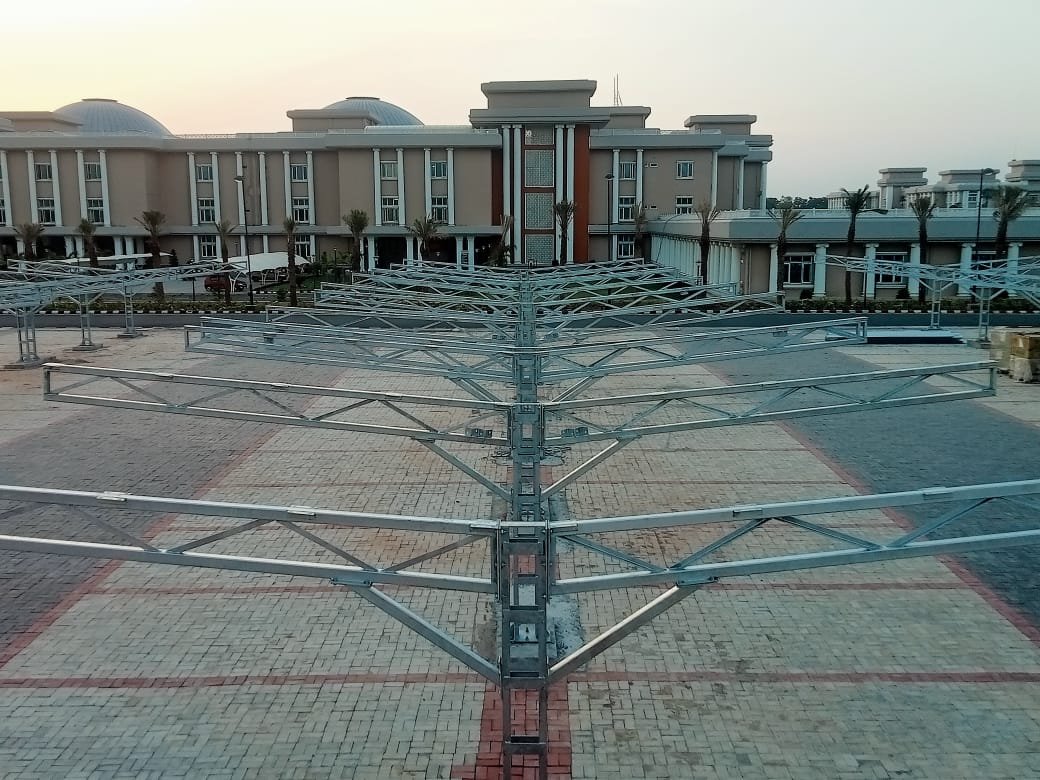
Solar Car Parking Structure for Commercial Buildings
As businesses look for practical ways to use renewable energy, solar car parking structures are becoming an attractive solution for commercial properties. These structures combine covered parking spaces with solar panels, allowing businesses to generate electricity while providing shade and weather protection for parked vehicles.
From office complexes and shopping centres to hospitals, educational institutions, hotels, and industrial facilities, solar car parking structures can make better use of available parking areas. With proper planning and engineering, they can support energy generation while improving the functionality of commercial spaces.
What Is a Solar Car Parking Structure?
A solar car parking structure is a specially designed framework that supports solar panels above vehicle parking areas. Unlike conventional parking sheds, it integrates solar panel mounting with the structural framework to create a covered parking space that can also generate solar power.
The system generally includes a steel support structure, columns, beams, purlins, bracing, solar panel mounting components, and suitable foundations. The final design depends on the site layout, parking requirements, panel specifications, environmental conditions, and applicable structural standards.
Solar car parking structures are suitable for many commercial and institutional applications where open parking areas receive adequate sunlight.
Key Benefits of Solar Car Parking Structures
1. Better Use of Existing Parking Space
Commercial properties often have large parking areas that remain exposed to direct sunlight throughout the day. Installing a solar car parking structure allows these spaces to serve two purposes: vehicle parking and solar energy generation.
This approach can be particularly useful for businesses that want to explore renewable energy without dedicating additional land exclusively to a solar installation.
2. Shade and Weather Protection for Vehicles
A properly designed parking structure provides shade and can help reduce direct exposure to sunlight. Depending on the roofing and panel arrangement, it can also provide protection from rain and other weather conditions.
This can improve the parking experience for employees, customers, visitors, and residents.
3. On-Site Renewable Electricity Generation
Solar panels installed above parking spaces can generate electricity for suitable on-site applications. Depending on the system configuration, generated power may help supply lighting, office equipment, common-area facilities, or other electrical loads.
Actual energy production depends on factors such as panel capacity, orientation, shading, local weather conditions, and system performance.
4. Efficient Land Utilisation
In urban and industrial areas, available land can be expensive or limited. Solar car parking structures help businesses make productive use of existing parking areas while supporting their renewable energy objectives.
They can be considered for new developments as well as suitable existing parking facilities.
5. Support for Sustainability Goals
Businesses increasingly evaluate ways to reduce their dependence on conventional electricity sources and improve the environmental performance of their facilities.
A solar car parking project can contribute to these efforts by enabling on-site renewable electricity generation. Its overall environmental and financial benefits depend on the electricity source being displaced, project costs, energy production, and maintenance requirements.
Important Design Considerations for Solar Car Parking Structures
A successful solar parking project requires more than simply installing panels over a parking area. The structure must be planned around the site’s operational requirements and engineering conditions.
1. Site Assessment and Parking Layout
The first step is to evaluate the available area, vehicle movement, entry and exit points, pedestrian access, and existing site conditions.
The layout should accommodate the intended vehicle types while maintaining sufficient clearance and safe circulation. Column placement should be coordinated with parking dimensions to avoid unnecessary obstruction.
2. Structural Strength and Load Calculations
The steel framework must be designed to support the combined loads associated with the solar panels, mounting components, and other relevant structural elements.
Engineers should consider applicable wind loads, dead loads, maintenance access requirements, and other site-specific conditions. Foundation design must also account for soil conditions and the loads transferred through the columns.
Professional structural calculations are essential for determining appropriate member sizes, connections, and foundation arrangements.
3. Solar Panel Orientation and Shading
Panel placement influences the amount of sunlight received throughout the day. The design should consider the location, roof geometry, panel orientation, spacing, and potential shading from nearby buildings or trees.
Coordination between the structural designer and solar system designer helps ensure that the mounting arrangement supports both structural requirements and the intended solar installation.
4. Steel Quality and Corrosion Protection
Since solar car parking structures are exposed to outdoor conditions, material selection and corrosion protection are important considerations.
The choice of steel grade, surface treatment, protective coating, and fabrication process should suit the project’s environmental conditions. Appropriate protection and regular inspection can help maintain the structure over its service life.
5. Drainage and Rainwater Management
The design should provide suitable arrangements for handling rainwater from the panel and roof surfaces. Gutters, downpipes, drainage routes, and discharge points should be planned to reduce water accumulation and inconvenience in parking areas.
Proper drainage planning can also help prevent avoidable deterioration of surrounding surfaces and structural components.
6. Electrical Safety and Maintenance Access
The solar installation requires appropriate electrical protection, cable routing, isolation arrangements, and access for inspection and maintenance.
Electrical components should be installed by qualified professionals in accordance with applicable standards. The structure should also allow safe access for authorised maintenance personnel without compromising the safety of parked vehicles or pedestrians.
Where Can Solar Car Parking Structures Be Installed?
Solar car parking structures can be considered for a wide range of commercial and institutional environments.
- Corporate offices: Generate electricity for suitable office loads while providing employee parking.
- Shopping centres: Use large parking areas for solar power generation and visitor shade.
- Hospitals: Explore on-site renewable electricity generation while providing parking for staff and visitors.
- Educational institutions: Combine covered parking with renewable energy initiatives.
- Hotels and resorts: Improve parking facilities while supporting sustainability objectives.
- Factories and warehouses: Make use of suitable parking areas to support the site’s electricity requirements.
- Residential complexes: Provide covered parking and potential shared solar electricity generation.
Each application requires a site-specific assessment to determine feasibility, capacity, structural configuration, and expected performance.
Solar Car Parking Structure vs Conventional Parking Shed
Both structures can provide covered parking, but their primary functions differ.
| Feature | Solar Car Parking Structure | Conventional Parking Shed |
|---|---|---|
| Main purpose | Parking and solar energy generation | Vehicle parking and shade |
| Roof arrangement | Designed to support solar panels | Designed primarily for weather protection |
| Electrical integration | Requires solar and electrical planning | Usually not required |
| Initial investment | Includes solar-support infrastructure and associated solar components | Depends on the shed design and materials |
| Energy generation | Possible with a suitable solar installation | Not inherent to the structure |
The right choice depends on the available budget, energy objectives, parking requirements, and site conditions.
What Determines the Cost of a Solar Car Parking Structure?
The total project cost varies according to several factors, so a reliable estimate requires project-specific information.
Key cost considerations include:
- Total parking area and number of parking spaces
- Structural design, steel quantity, and fabrication requirements
- Foundation type and site preparation
- Solar panel capacity and mounting arrangement
- Electrical equipment, cabling, and installation
- Corrosion protection and finishing
- Transportation, installation, and maintenance access
The cost of the steel structure and the cost of the complete solar power system should be evaluated separately where appropriate. This helps businesses understand the investment required for both the parking infrastructure and electricity generation.
Why Choose a Professional Solar Structure Manufacturer?
Selecting an experienced manufacturer is important for ensuring that the structure meets the project’s design and operational requirements.
Before finalising a supplier, consider the manufacturer’s fabrication capabilities, material quality controls, ability to customise designs, dimensional accuracy, project coordination, delivery timelines, and installation support.
SmartCube India specialises in solar mounting structures and steel fabrication solutions for applications including solar car parking, rooftop installations, and ground-mounted solar projects. The company also offers structural components and fabrication solutions for industrial applications.
Working with a suitable manufacturing partner can help coordinate structural requirements with the broader solar project. Final designs should be verified by qualified professionals against applicable standards and site-specific conditions.
Conclusion
Solar car parking structures offer commercial properties an opportunity to combine covered parking with on-site solar electricity generation. By making productive use of existing parking areas, businesses can explore renewable energy while improving the usability of their outdoor facilities.
Successful implementation depends on careful site assessment, structural engineering, solar panel planning, material selection, drainage, electrical safety, and long-term maintenance.
Whether you are developing a new commercial facility or upgrading an existing parking area, a well-planned solar car parking structure can be a practical addition to your infrastructure strategy.
Planning a solar car parking project? Contact SmartCube India to discuss your solar mounting structure and steel fabrication requirements.