

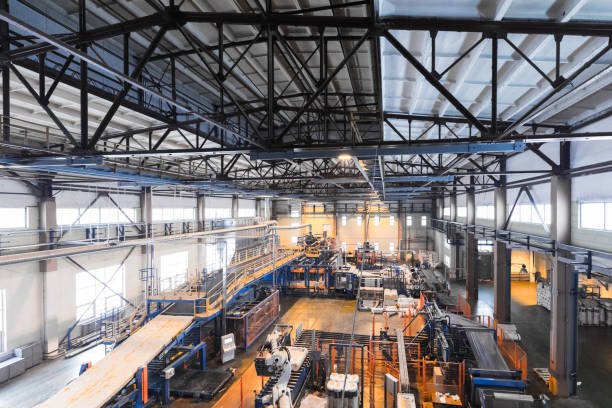
How Long a Steel Factory Shed Last
When planning an industrial facility, durability is one of the most important factors to consider. A factory shed is a long-term investment, and businesses need a structure that can withstand daily operations, weather conditions, structural loads, and environmental exposure.
So, how long does a steel factory shed last?
The service life of a steel factory shed depends on several factors, including the quality of steel, structural design, fabrication accuracy, corrosion protection, environmental conditions, maintenance, and the way the building is used.
A properly designed, fabricated, installed, and maintained steel structure can provide long-term service for industrial and commercial applications.
What Determines the Life of a Steel Factory Shed?
There is no single fixed lifespan that applies to every factory shed. Two structures made from steel can have very different service lives depending on their design, materials, location, and maintenance.
Some of the most important factors include:
- Steel quality and specifications
- Structural design
- Fabrication quality
- Corrosion protection
- Roof and wall materials
- Weather exposure
- Structural loading
- Maintenance practices
- Quality of installation
- Future modifications and expansion
SmartCube India focuses on precision-fabricated steel structures for factory sheds, using components such as columns, rafters, purlins, and bracings to create structural systems suited to industrial requirements.
1. Quality of Steel
The quality and specification of the steel used in a factory shed have a direct influence on structural performance and durability.
High-quality steel selected according to the project’s engineering requirements can provide reliable strength and long-term performance.
The steel should be appropriate for the expected loads and environmental conditions of the project.
2. Proper Structural Design
A factory shed must be designed according to its actual requirements.
The design may need to account for:
- Dead loads
- Roof loads
- Wind loads
- Maintenance loads
- Equipment loads
- Machinery
- Suspended systems
- Solar installations
- Future expansion
For example, a factory with heavy machinery may have very different structural requirements from a warehouse used primarily for storage.
SmartCube’s factory-shed guidance highlights the importance of considering building size, span, height, equipment, wind conditions, and future expansion during structural planning.
3. Corrosion Protection
Corrosion is one of the major concerns for exposed steel structures.
Moisture, rain, humidity, chemicals, industrial pollutants, and coastal or harsh environments can accelerate corrosion if the steel is not adequately protected.
Depending on the project, suitable protective coatings, galvanization, painting systems, or other corrosion-control measures may be considered.
SmartCube’s product range includes galvanized steel options for certain structural components. Its Z-purlin and Hat-purlin solutions, for example, highlight corrosion-resistant finishes for long-term performance.
4. Quality of Fabrication
The durability of a steel structure depends not only on the raw material but also on how accurately the components are fabricated.
Poorly fabricated components can create:
- Alignment problems
- Connection issues
- Installation delays
- Uneven load distribution
- Additional modification requirements
Precision fabrication helps ensure that structural components are manufactured according to the required dimensions.
SmartCube India highlights precision fabrication and CNC-based manufacturing for its structural components, with an emphasis on dimensional accuracy and consistent quality.
5. Proper Installation
Even a well-designed and well-fabricated structure can experience problems if it is not installed correctly.
Columns, rafters, purlins, bracings, connections, roofing systems, and other components must be assembled according to the approved structural design.
Correct installation helps the structure perform as intended and reduces the risk of avoidable structural or maintenance problems.
6. Local Weather Conditions
The environment surrounding a factory can have a significant effect on the service life of a steel structure.
Factors such as:
- Heavy rainfall
- High humidity
- Strong winds
- Extreme temperatures
- Industrial pollution
- Chemical exposure
- Coastal conditions
can influence material deterioration and maintenance requirements.
For this reason, structural design and material protection should take the project’s location and environmental conditions into account.
7. Regular Maintenance
Regular maintenance is essential for extending the useful life of a factory shed.
Maintenance inspections can identify problems before they become more serious.
A maintenance program may include checking:
- Steel members
- Roof sheets
- Purlins
- Bolted connections
- Welded areas
- Protective coatings
- Drainage systems
- Rust or corrosion
- Water leakage
- Structural modifications
Early identification of corrosion, damaged roofing, loose connections, or other issues can help prevent larger repair requirements.
8. Factory Usage and Additional Loads
A factory shed may be modified after construction as the business grows.
New machinery, cranes, solar panels, ventilation systems, ducts, storage systems, or suspended equipment can introduce additional loads.
These modifications should not be added without proper structural evaluation.
If additional loads are required, a qualified structural professional should determine whether the existing structure can safely support them.
SmartCube’s factory-shed guidance specifically recommends considering machinery, cranes, solar installations, suspended equipment, and other additional loads during structural planning.
How Can You Extend the Life of a Steel Factory Shed?
A few important practices can help maintain long-term performance.
Use Suitable Materials
Select steel and other construction materials according to the project’s structural and environmental requirements.
Protect Against Corrosion
Use an appropriate protective system based on the site’s exposure conditions and maintain the coating when required.
Inspect the Structure Regularly
Periodic inspections can identify rust, coating damage, deformation, leakage, and connection issues at an early stage.
Maintain the Roof and Drainage
Water accumulation and leakage can contribute to corrosion and damage. Keeping gutters, drainage systems, and roof components in good condition is therefore important.
Avoid Unplanned Modifications
Before adding machinery, solar panels, cranes, storage systems, or other heavy installations, evaluate their structural impact.
Repair Problems Early
Small issues are generally easier to address before they develop into larger structural or maintenance problems.
Why Steel Is Used for Factory Sheds
Steel is widely used for industrial structures because it can provide a combination of strength, structural flexibility, fabrication efficiency, and adaptability.
Steel structures can also be designed around large open spaces, making them suitable for manufacturing units, warehouses, workshops, and other industrial facilities.
SmartCube India provides steel fabrication solutions including factory shades, columns, rafters, C-purlins, Z-purlins, bracings, and other structural components.
Steel Factory Shed vs Short-Term Structure
A factory shed should be viewed as a complete engineered structure rather than simply a roof supported by steel members.
Its long-term performance depends on the combination of:
Engineering + Material Quality + Fabrication + Installation + Protection + Maintenance
If any of these areas are overlooked, the structure may require additional repairs or maintenance earlier than expected.
When Should a Steel Factory Shed Be Inspected?
Regular inspections are useful throughout the building’s service life, particularly after:
- Severe storms
- Heavy rainfall
- Major structural modifications
- Installation of heavy equipment
- Installation of rooftop solar systems
- Signs of corrosion
- Roof leakage
- Visible deformation or damage
The frequency and scope of inspection should be determined according to the building’s design, usage, environment, and applicable engineering requirements.
Why Choose SmartCube India for Steel Factory Structures?
SmartCube India is a fabrication company established in 2018 and provides steel fabrication solutions across industrial, commercial, infrastructure, and renewable-energy applications. Its offerings include factory shades, rafters, C-purlins, Z-purlins, bracings, columns, and solar structures.
The company emphasizes:
- Precision fabrication
- High-quality steel components
- Customized structural solutions
- Dimensional accuracy
- Structural strength
- Durable performance
Its factory-shed solutions are designed around project-specific requirements, including structural size, span, loads, environmental conditions, and future expansion.
Frequently Asked Questions
How long does a steel factory shed last?
There is no universal lifespan for every steel factory shed. Its service life depends on material quality, structural design, corrosion protection, environmental exposure, installation, usage, and maintenance.
Does steel rust in a factory shed?
Steel can corrode when exposed to moisture and other environmental factors. Appropriate protective coatings, galvanization, regular inspection, and maintenance can help control corrosion.
Can an old factory shed be modified?
In many cases, modifications may be possible, but the existing structure should be evaluated before adding significant loads or changing its configuration.
Does maintenance increase the life of a steel shed?
Proper maintenance can help identify corrosion, roof problems, connection issues, and other defects early, helping maintain the structure’s performance over time.
Can solar panels be installed on an existing factory shed?
Solar panels can potentially be installed on suitable factory structures, but the existing structure should be evaluated for the additional loads and wind effects before installation. SmartCube provides solar mounting structures for industrial applications.
Conclusion
A steel factory shed can provide long-term service when it is properly engineered, fabricated, installed, protected, and maintained. Instead of focusing only on the initial construction cost, businesses should consider the complete lifecycle of the structure.
The right combination of quality steel, structural engineering, precision fabrication, corrosion protection, professional installation, and regular maintenance can contribute to reliable long-term performance.
If you are planning a new factory shed or evaluating an existing industrial structure, working with an experienced steel fabrication company can help you select a solution suited to your project’s requirements.
Planning a Durable Factory Shed?
SmartCube India provides customized steel fabrication and factory shed solutions, including columns, rafters, C-purlins, Z-purlins, bracings, and other structural components.
Contact SmartCube India today to discuss your factory shed requirements and get a solution designed for your project.