

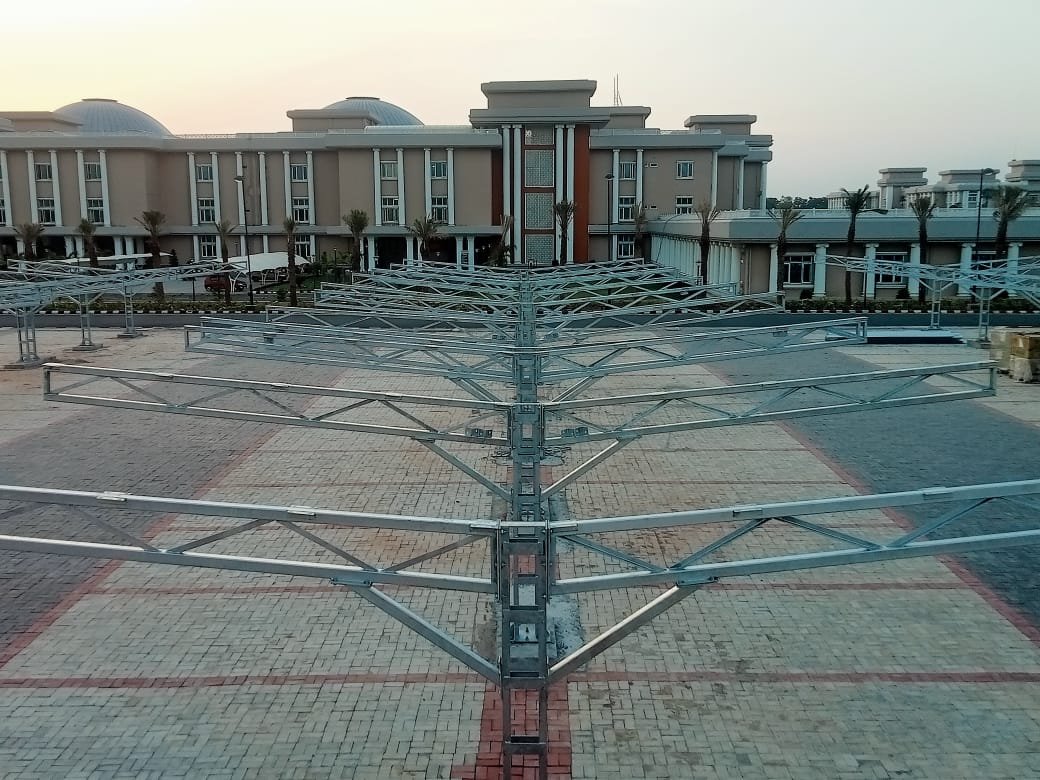
Solar Car Parking Structure Manufacturer
Parking areas are an essential part of offices, shopping centres, hospitals, educational institutions, factories, residential complexes, and other commercial properties. However, large parking spaces often remain underutilized when it comes to their potential for renewable energy generation.
A solar car parking structure offers a practical way to use the same space for two purposes: providing covered parking for vehicles and supporting solar panels for electricity generation.
Instead of treating a parking area as space used only for vehicles, businesses and institutions can transform it into an energy-generating infrastructure while also providing shade and weather protection for parked vehicles.
SmartCube India manufactures solar mounting structures, including solar car parking structures, designed for commercial, industrial, and other applications. The company’s website highlights its experience in steel fabrication and solar structures, with more than 400 completed projects.
What Is a Solar Car Parking Structure?
A solar car parking structure, also known as a solar carport, is an elevated structural system installed over a parking area to support solar panels.
The structure serves two functions:
- Provides shade and protection for parked vehicles
- Creates a suitable elevated platform for solar panels
The solar panels installed on the structure can generate electricity from sunlight, allowing the parking area to become part of a property’s renewable energy system.
Unlike a conventional ground-mounted solar installation, a solar carport makes use of an area that is already being used for parking.
How Does a Solar Car Parking Structure Work?
The basic working principle is straightforward.
Step 1: Structural Framework
A steel framework is designed and installed above the parking area. The structure must be designed according to the project requirements, including panel configuration, height, wind conditions, and site layout.
Step 2: Solar Panel Installation
Solar panels are mounted on the elevated structure at an appropriate orientation and tilt.
Step 3: Solar Energy Generation
The panels capture sunlight and convert it into electrical energy through the solar power system.
Step 4: Power Utilization
The generated electricity can be used according to the property’s solar system configuration and applicable electrical setup.
This creates a dual-purpose infrastructure where the parking area continues to serve vehicles while also contributing to renewable energy generation.
Why Turn Parking Areas into Solar Energy Spaces?
Many commercial and institutional properties have substantial parking areas but limited unused land.
Installing a solar car parking structure can make better use of that existing space.
1. Dual Use of the Same Space
The biggest advantage of a solar carport is its ability to combine parking and solar generation.
The area does not have to be converted into a separate solar plant. Vehicles can continue to use the parking space underneath while solar panels occupy the structure above.
2. Shade for Parked Vehicles
The elevated solar structure can provide shade over parked vehicles.
This can help reduce direct exposure to sunlight and provide a more comfortable parking environment, particularly during hot weather.
It can also provide some protection from rain and other weather conditions depending on the structure’s design.
3. Better Use of Available Property
Land availability can be a major consideration for commercial and industrial properties.
Instead of acquiring additional land for a ground-mounted solar installation, suitable parking areas can potentially be used for solar generation.
SmartCube’s solar mounting structure solutions include rooftop, ground-mounted, elevated, and car parking configurations for different project requirements.
4. Renewable Energy Generation
Solar panels installed above parking spaces can generate electricity from available sunlight.
For businesses and institutions with significant daytime electricity consumption, a properly planned solar installation can become part of their broader energy strategy.
5. Improved Infrastructure
A well-designed solar carport can combine functionality with modern infrastructure.
For commercial properties, the structure can provide a more organized parking environment while contributing to the property’s renewable energy initiatives.
Where Can Solar Car Parking Structures Be Used?
Solar car parking structures can be considered for many locations where sufficient parking space and suitable site conditions are available.
Shopping Centres and Malls
Shopping centres often have large outdoor parking areas. Solar carports can allow these spaces to provide parking while supporting electricity generation.
Hospitals
Hospitals typically require reliable electricity and may have substantial parking requirements for patients, visitors, doctors, and staff.
A solar car parking system can make productive use of suitable parking areas.
Office Buildings
Corporate offices and IT parks can use solar carports to combine employee or visitor parking with renewable energy infrastructure.
Educational Institutions
Schools, colleges, and universities with large parking areas can consider solar carports as part of their sustainability initiatives.
Factories and Industrial Facilities
Industrial properties may have significant parking requirements and electricity consumption. A solar car parking structure can provide a way to combine both requirements within the same site.
Residential Complexes
Large housing societies and residential developments may also have suitable open parking areas for solar carport installations, subject to site conditions and structural feasibility.
Solar Car Parking vs Traditional Ground-Mounted Solar
Both systems have their own applications.
| Feature | Solar Car Parking | Ground-Mounted Solar |
|---|---|---|
| Space used | Existing parking area | Dedicated land |
| Vehicle parking | Yes | No |
| Solar generation | Yes | Yes |
| Vehicle shade | Yes | No |
| Land requirement | Parking area | Separate land |
| Structure height | Elevated | Generally lower |
| Typical applications | Malls, offices, hospitals, institutions | Solar plants, open land projects |
The right choice depends on available space, project capacity, site conditions, structural requirements, and overall project objectives.
What Should Be Considered Before Installing a Solar Carport?
A solar car parking project requires more than simply placing panels over a parking area.
Several engineering and site-related factors should be evaluated.
Parking Layout
The structure should be designed around the actual parking arrangement, vehicle movement, entry and exit points, and available space.
Structure Height
The height should provide sufficient clearance for the vehicles using the parking area while maintaining structural stability.
Wind Load
Solar carports are elevated structures and can be exposed to significant wind forces. Wind conditions at the project location should therefore be considered during structural design.
SmartCube’s solar mounting structure information highlights wind-load resistance and project-specific structural design as important considerations.
Material Selection
The material used for the structure can affect strength, durability, corrosion resistance, and long-term performance.
SmartCube highlights hot-dip galvanized steel and aluminium among its solar mounting structure material options.
Drainage and Rainwater
The design should consider how rainwater will flow from the solar panel surface so that parking areas and vehicle movement are not unnecessarily affected.
Electrical Planning
The solar panels, cables, inverters, electrical equipment, and connection points need to be planned along with the structural design.
Maintenance Access
There should be suitable access for cleaning solar panels, inspecting structural components, and carrying out maintenance work.
Why Structural Quality Matters in Solar Carports
The solar panels may be the visible part of a solar installation, but the supporting structure plays an important role in keeping the system stable.
A solar carport structure must support the weight of the panels and withstand environmental conditions such as wind and rain.
Poor structural design or unsuitable materials can create long-term maintenance and safety concerns.
A project-specific structure should consider factors such as:
- Panel dimensions
- Number of panels
- Structure height
- Parking layout
- Wind conditions
- Material thickness
- Corrosion protection
- Foundation requirements
- Panel orientation and tilt
- Site-specific requirements
SmartCube India emphasizes customized structural solutions, load-bearing capacity, corrosion resistance, and long-term durability in its solar structure offerings.
Can Solar Car Parking Structures Support EV Charging?
Solar car parking areas can also be considered alongside electric vehicle charging infrastructure.
The solar panels generate electricity while vehicles are parked beneath the structure. With appropriate electrical design and charging infrastructure, a solar carport can potentially support EV charging applications.
However, EV charging integration requires separate electrical planning, including charger capacity, power requirements, distribution equipment, cabling, and applicable safety requirements.
This makes solar carports particularly relevant for businesses and institutions planning to develop modern parking and energy infrastructure together.
SmartCube India’s Solar Car Parking Structure Solutions
SmartCube India specializes in solar mounting structures and steel fabrication solutions for different applications.
The company’s website lists solar car parking structures among its products and showcases a 2 MW car parking project at Ranchi High Court.
SmartCube’s solar structure solutions focus on:
- Customized structural design
- High load-bearing capacity
- Corrosion-resistant construction
- Industrial-grade fabrication
- Solar car parking applications
- Rooftop solar structures
- Ground-mounted solar structures
- Elevated solar structures
The company was established in 2018 and provides fabrication and solar structure solutions across West Bengal and other eastern and northeastern regions.
Is a Solar Carport Suitable for Every Parking Area?
Not necessarily.
The feasibility of a solar car parking structure depends on factors such as:
- Available parking area
- Structural design requirements
- Soil and foundation conditions
- Wind conditions
- Parking layout
- Solar panel configuration
- Electricity requirements
- Project budget
- Local site conditions
- Installation and maintenance requirements
A site assessment and project-specific structural design can help determine whether a solar carport is appropriate for a particular property.
Frequently Asked Questions
What is a solar car parking structure?
A solar car parking structure is an elevated structure installed over parking spaces to support solar panels while providing shade and protection for vehicles.
What are the main benefits of a solar carport?
A solar carport can provide vehicle shade, make productive use of existing parking space, and support solar electricity generation without requiring a separate ground-mounted solar area.
Where are solar car parking structures commonly used?
They can be used at malls, hospitals, offices, factories, educational institutions, residential complexes, and other properties with suitable parking areas.
Is a solar carport better than a ground-mounted solar structure?
The two systems serve different site requirements. A solar carport can be useful where parking space is available and dual use of the area is desirable, while ground-mounted systems are generally suitable where dedicated land is available.
Can a solar carport be customized?
Yes. Solar car parking structures can be designed according to parking layouts, panel dimensions, structure height, site conditions, wind requirements, and other project-specific factors.
Can solar carports be integrated with EV charging?
They can be planned alongside EV charging infrastructure, subject to appropriate electrical and structural design.
How long can a solar mounting structure last?
Service life depends on material quality, protective coating, structural design, installation, environmental exposure, and maintenance. SmartCube states a structure life of 25 years or more for its solar mounting structures, depending on the application and system conditions.
Conclusion
A parking area does not have to be used only for parking.
With a properly engineered solar car parking structure, the same space can provide vehicle shade while supporting solar electricity generation. This makes solar carports a practical infrastructure option for businesses, hospitals, offices, factories, educational institutions, residential complexes, and other properties with suitable parking areas.
However, successful implementation depends on proper structural engineering, material selection, wind-load considerations, parking layout, electrical planning, and professional fabrication.
SmartCube India provides customized solar mounting structures and steel fabrication solutions, including solar car parking structures. With its experience in solar and structural fabrication projects, SmartCube can help businesses and institutions develop parking structures designed around their specific site and project requirements.
Planning to turn your parking area into a solar energy-generating space? Contact SmartCube India for a customized solar car parking structure solution and discuss your project requirements.